Product Feature
I. Extremely Low Pressure Drop, Significant Energy Savings
The open radial structure of the Teller Rosette Ring allows gas to pass through the packing layer almost unimpeded. Gas can freely pass through the gaps between packing particles and the channels between the petals, resulting in extremely smooth flow. Compared to traditional packing of the same specifications, the Teller Rosette Ring reduces pressure drop by 50%–70%, making it one of the lowest pressure drop random packings. This characteristic is particularly valuable in applications with extremely high gas volumes, such as flue gas desulfurization and waste gas treatment, significantly reducing fan energy consumption.
II. Extremely High Throughput, High Processing Capacity
Due to its low pressure drop and high porosity, the Teller Rosette Ring can withstand extremely high gas velocities without flooding. With the same tower diameter and packing height, the Teller Rosette Ring's processing capacity can reach 1.5–2 times that of traditional packings, making it particularly suitable for applications with extremely high gas volumes, significantly increasing processing capacity without increasing the tower diameter.
III. Extremely Strong Anti-clogging Capacity, Long Operating Cycle
The open structure of the Teller Rosette Ring gives it extremely strong anti-clogging capabilities. The wide channels between the petals prevent solid particles from accumulating within the packing layer; even if a small amount of impurities adhere, they are easily carried away by the gas-liquid flow. This characteristic makes Teller Rosette Ring particularly suitable for dusty gases, media prone to scaling or polymerization, and its operating cycle is much longer than traditional packings.
IV. Lightweight and Easy to Install
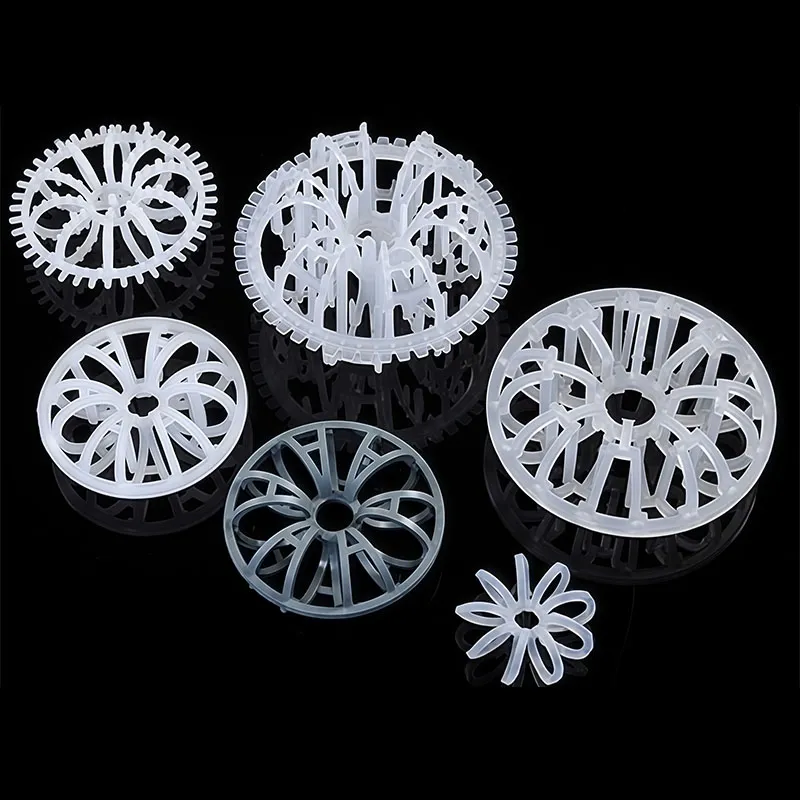
Teller Rosette Rings are made of plastic or thin-walled metal, making them extremely lightweight. The porosity of plastic Teller Rosette Rings can reach over 90%, resulting in a weight per unit volume far lower than traditional packings. This characteristic not only reduces transportation and filling costs but also significantly lightens the burden on the tower structure and supports.
V. Uniform Gas-Liquid Distribution, No Dead Zones
The highly open structure of Teller Rosette Rings ensures extremely uniform gas and liquid distribution within the packing layer. Gas can freely choose the path of least resistance, and liquid can freely seep downwards, eliminating flow deviation or dead zones caused by packing orientation. The packing layer has a high effective utilization rate.
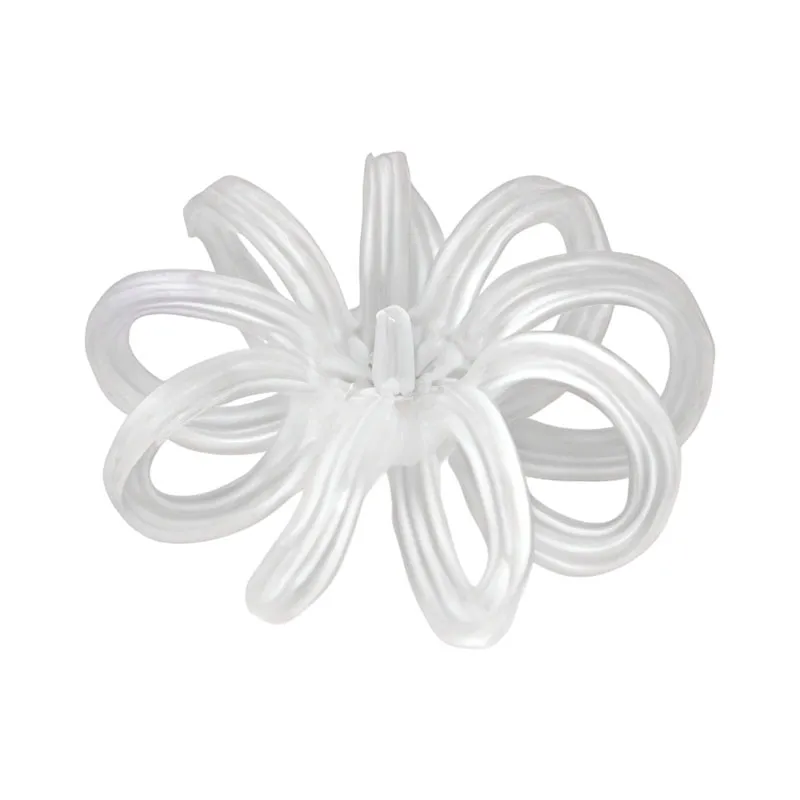
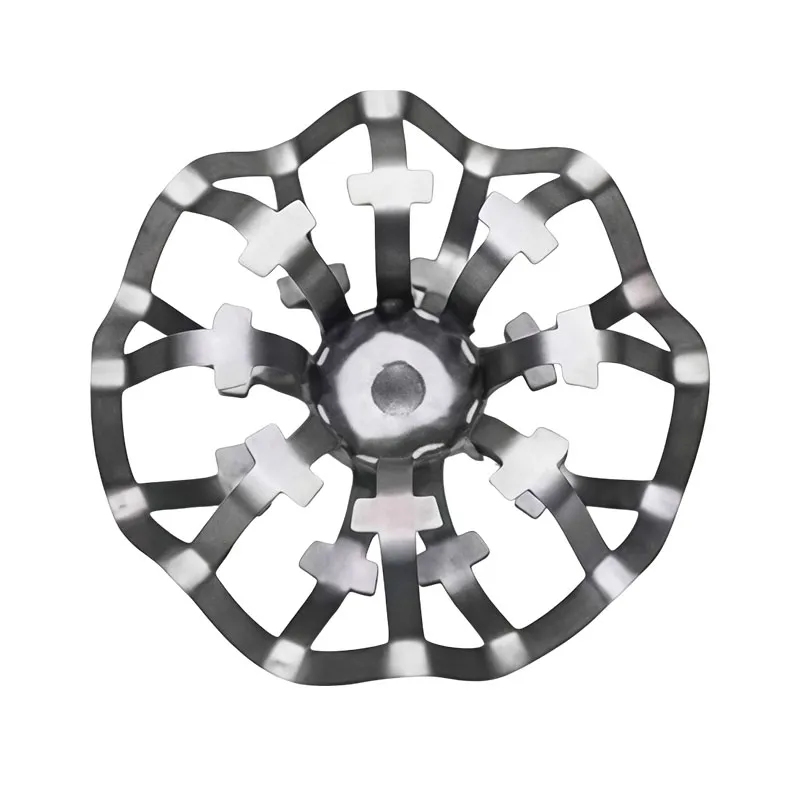
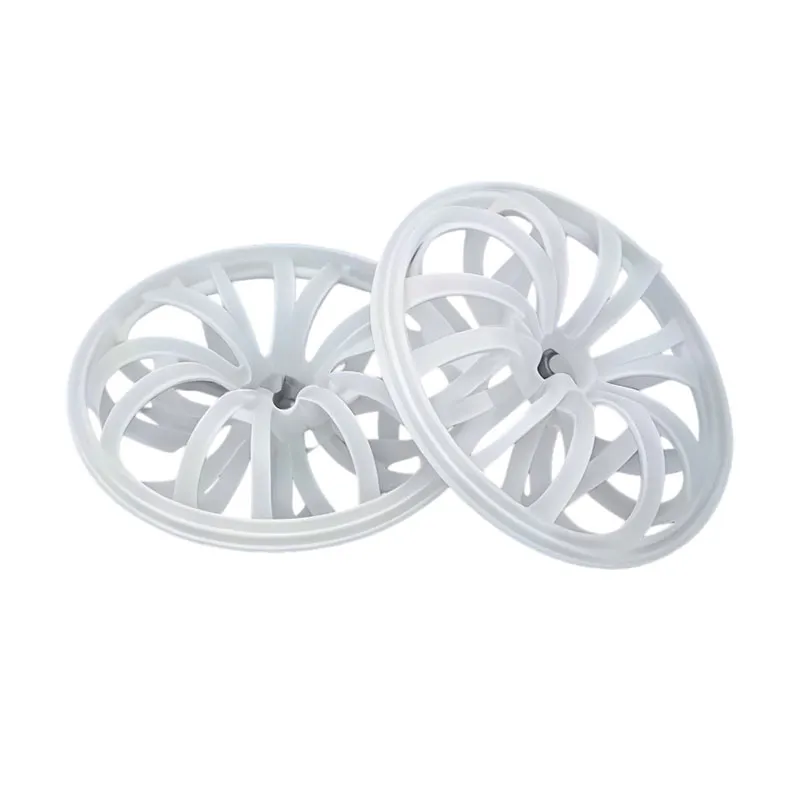
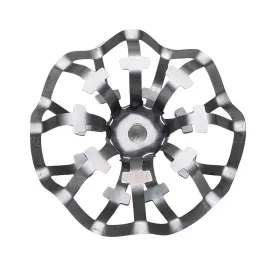
The core structure of Teller Rosette Rings consists of petals radiating outwards from the center. These petals are arranged radially, with wide channels between them. Unlike the closed ring walls of annular packing, the Teller Rosette Ring has no "walls," allowing gas to pass freely from any direction. This open structure reduces the pressure drop of the Teller Rosette Ring to a fraction of that of traditional packing.
Why Choose AYRTTER?
Own factory, years of experience in packing design and manufacturing
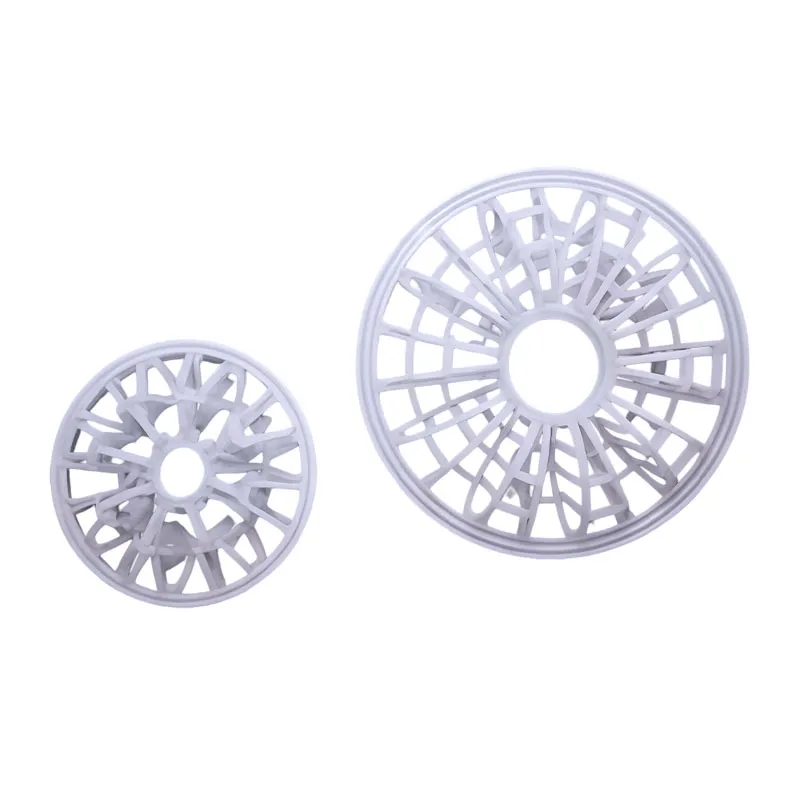
Complete Teller Rosette Ring product line: standard, ribbed, small, large
Precision injection molding process, precise petal shape, smooth edges
Multiple plastic materials available to meet different corrosion and temperature requirements
ISO9001 certified, stable and reliable quality
Extensive experience in flue gas desulfurization
Provides full-process technical support from selection and calculation to installation
Direct sales, no intermediaries, high cost-performance
As the most uniquely shaped product among random packings, the Teller Rosette Ring demonstrates irreplaceable value in harsh conditions such as flue gas desulfurization and waste gas treatment due to its extremely low pressure drop, extremely high throughput, and strong anti-clogging ability. It is not only a highly efficient mass transfer element, but also a crystallization of human wisdom in learning from nature and applying biomimicry principles to industrial design. Choosing the AYRTTER Teller Rosette Ring means choosing a harmonious balance between low energy consumption, high efficiency, and environmental friendliness.